Independent guide. Not a store.

Pimple patches, explained without the hype

PimplePatche explains how pimple patches (also called acne patches) work, which spots they suit, and when to put the sticker down and see a dermatologist.

Explore Patches Buy the patchLink coming soon Which patch for which spot?

Sources listed on every guideNo store, no pricesNo fake reviews or before-and-afters
Cross-section of a hydrocolloid pimple patch on skinA thin outer film covers a soft hydrocolloid layer. The hydrocolloid layer sits over a pimple with a whitehead and takes in fluid from the surface, turning into a gel. The patch takes in fluid from the surface It cannot reach a bump that sits deep under the skin. Thin outer film Hydrocolloid layer (turns to gel) Skin Pimple with a whitehead Absorbs fluid from the spotKeeps fingers away

Why use a pimple patch?

A patch is a tiny wound dressing for one spot. Here is when it earns its place, and when it does not.

The problem

You keep picking at it

Squeezing and rubbing prolong inflammation and can leave dark marks.

What a patch does

It is a physical barrier

A stuck-on patch keeps fingers off the spot. Dermatology Times suggests this may explain part of the benefit.

The problem

The pimple has opened or is weeping

Fluid at the surface leaves the spot wet, exposed and easy to irritate.

What a patch does

It absorbs fluid and keeps the spot covered

Hydrocolloid takes in fluid and turns to gel. It keeps the area moist, the way a wound dressing does.

The problem

It is deep, hard and painful

There is no head and no surface fluid. It feels like a lump under the skin.

The honest answer

A patch cannot reach it

See a dermatologist. Do not squeeze. Dermatologists have treatments that a sticker cannot match.

Which patch for which spot?

Patches need something to absorb. That is why they suit spots with a head or an opening, and why they do little for blackheads or deep bumps.

Type of spotWill a patch help?WhyBetter next step
Whitehead or pustuleOften helpsFluid near the surface gives the gel something to absorb.Use a patch. Do not squeeze.
Pimple that has already poppedOften helpsIt is open and may be draining. A patch protects it and keeps hands away.Wash hands, clean gently, cover with a patch.
Closed red bump with no headMight help a littleThere is little fluid to absorb, so effects are smaller and slower.Leave it alone and give it time.
BlackheadUnlikely to helpA blackhead is an open clogged pore with no surface fluid to absorb.Ask a pharmacist or dermatologist about options.
Deep, painful bumpDoes not reach itThe problem sits well below the skin surface.See a dermatologist, especially if there are several or they keep returning.
  1. Is the spot a deep, painful lump under the skin?

    Yes: A patch cannot reach it. Do not squeeze. See a dermatologist, especially if there are several.

    No: Go to the next question.

  2. Does it have a visible head, or has it already opened or drained?

    Yes: A patch is a good fit. Use clean hands and dry skin, and follow the pack.

    No: Go to the next question.

  3. Is it a closed red bump or a blackhead?

    Yes: A patch will do little. Leave it alone, and ask a pharmacist about options.

    No: If you are unsure, ask a pharmacist or dermatologist.

Should you use a patch on this spot?Answer the questions from the top.Source: Built from AAD, Dermatology Times, TIME and NewBeauty guidance.This is a general guide, not a diagnosis. If you are unsure, ask a pharmacist or dermatologist.

Want the reasoning? Which pimples do patches help? covers every spot type.

Every type of pimple patch

All the kinds you will see, with what each is for and what to watch for. Pick the type that suits your spot, then follow the pack directions. Read the full types guide and how to use each one.

Images are illustrations of each type of pack. They are not product recommendations or test results. Buy links are added by the site owner.

Everyday patches

Illustration of a plain round hydrocolloid pimple patch pack with round patches on a sheet.
Best studied

Classic hydrocolloid (round)

A thin film over a layer of absorbent hydrocolloid. Nothing else added.

Best for
Whiteheads, pustules and spots that have opened or drained.
Watch for
Adhesive irritation, and wearing it too long.
Buy the patchSoon
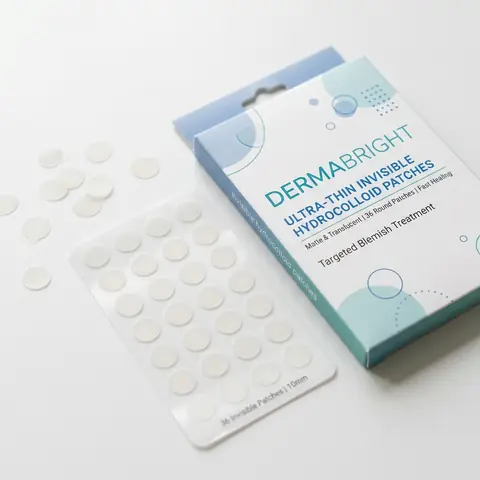
Illustration of a thin, clear daytime pimple patch pack with small round patches.
Same material as plain

Ultra-thin, clear (daytime)

A thinner, more transparent hydrocolloid patch that is less noticeable.

Best for
Daytime wear, when you want a spot to be less visible.
Watch for
May fill up or lift sooner. Follow the pack's wear time.
Buy the patchSoon
Illustration of a thick overnight pimple patch pack with a sheet of round patches.
Same material as plain

Thicker patch (overnight)

A thicker, more visible hydrocolloid patch meant to be worn while you sleep.

Best for
Wearing at night, then removing in the morning.
Watch for
It is more visible, and the word overnight is not a promise of fast results.
Buy the patchSoon

Patches with added ingredients

Illustration of a salicylic acid pimple patch pack next to a sheet of round patches.
Not compared head to head

Salicylic acid patch

Hydrocolloid with salicylic acid added.

Best for
People whose skin tolerates the ingredient and who have a fairly inflamed pimple, as one source describes.
Watch for
May irritate dry or sensitive skin. Check the percentage on the pack.
Buy the patchSoon
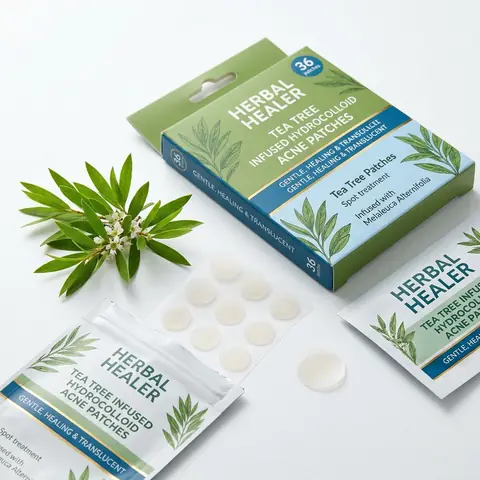
Illustration of a tea tree oil pimple patch pack with a sprig of leaves and round patches.
Not compared head to head

Tea tree oil patch

Hydrocolloid with tea tree oil added, which is described as antibacterial.

Best for
Skin that tolerates plant oils.
Watch for
Tea tree oil can be drying and can irritate some skin.
Buy the patchSoon
Illustration of a cica centella pimple patch pack with round clear patches.
Not compared head to head

Cica (centella) patch

Hydrocolloid or hydrogel with centella asiatica added, which is described as calming.

Best for
People who want a calming ingredient and whose skin tolerates it.
Watch for
No study we found shows it beats a plain patch.
Buy the patchSoon
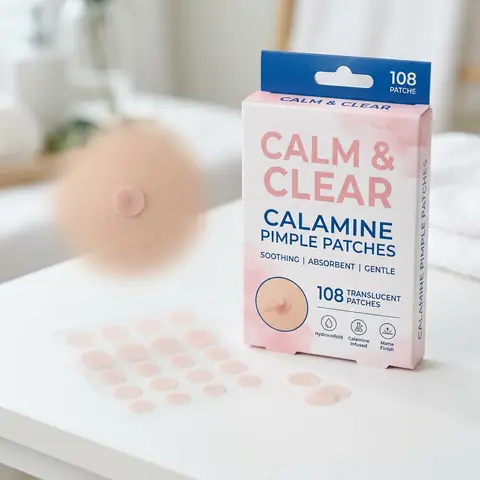
Illustration of a calamine pimple patch pack with small pink round patches.
No studies found

Calamine patch

Hydrocolloid with calamine, a skin protectant made of zinc oxide and iron oxide.

Best for
People curious about a soothing mineral ingredient.
Watch for
Calamine can dry or irritate skin, and we found no study of calamine patches for acne.
Buy the patchSoon

Microneedle patches

Illustration of a microneedle acne patch pack with a hand holding a small round patch.
Early evidence only

Microneedle (microdart) patch

A patch with tiny dissolving spikes that carry ingredients into the top layer of skin.

Best for
Marketed for closed or deeper spots. That use is unproven.
Watch for
Added ingredients can irritate. Deep, painful bumps need a dermatologist.
Buy the patchSoon

Shaped and fun patches

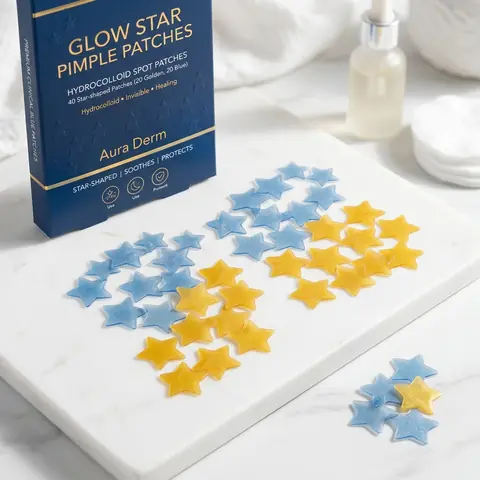
Illustration of star-shaped colored pimple patches on a marble surface.
Same material as plain

Star-shaped patch

A plain or medicated patch cut in a star shape, often in colors.

Best for
Fun, or fitting a small spot.
Watch for
A shape does not change what a patch can treat.
Buy the patchSoon
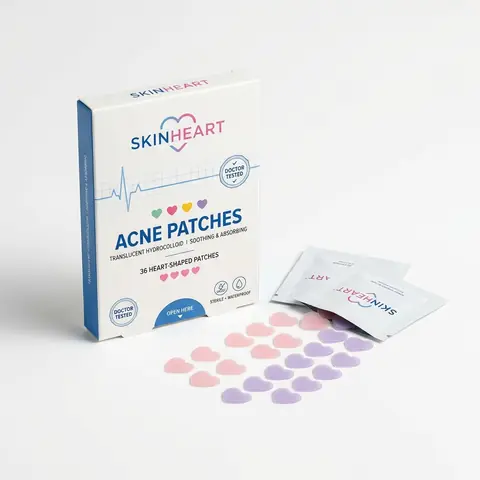
Illustration of pastel heart-shaped pimple patches beside a box.
Same material as plain

Heart-shaped patch

A patch cut in a heart shape, often pastel.

Best for
Fun, or fitting a small spot.
Watch for
Choose a size that covers the pimple with a small border.
Buy the patchSoon
Illustration of flower-shaped pimple patches on a clear sheet.
Same material as plain

Flower-shaped patch

A patch cut in a flower shape.

Best for
Fun, or fitting a small spot.
Watch for
Same limits as any hydrocolloid patch.
Buy the patchSoon
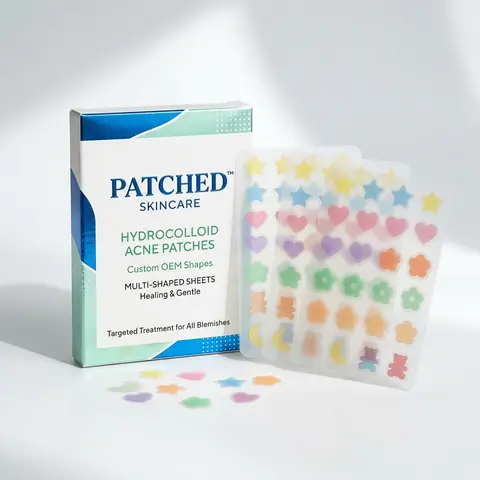
Illustration of a pack of multi-shaped colorful pimple patches.
Same material as plain

Mixed and custom shapes

Packs with several shapes, such as stars, hearts, flowers and dots.

Best for
Variety, or matching size to the spot.
Watch for
Check the sizes in the pack before you buy.
Buy the patchSoon

Large and area patches

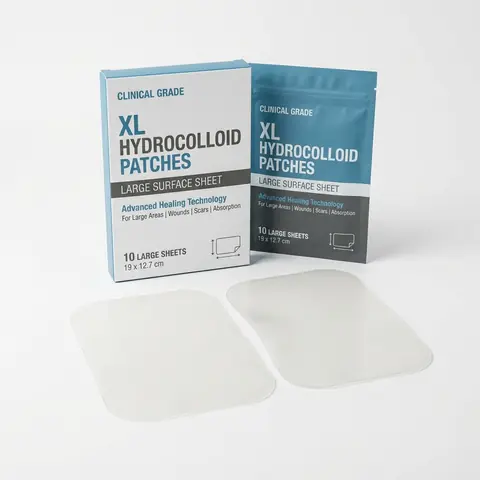
Illustration of extra large hydrocolloid patch sheets with a pack.
Same material as plain

XL and large patches

Large sheets of hydrocolloid, sometimes cut down to size.

Best for
A larger spot, or a small group of surfaced spots close together.
Watch for
Cover as little healthy skin as you can. Many closed bumps need another plan.
Buy the patchSoon
Same material as plain

Cheek and jawline patches

Larger or curved patches sized for the cheek or jawline.

Best for
Spots on the cheek or jaw that suit a patch.
Watch for
For many spots across the cheek, ask about a treatment plan.
Buy the patchSoon
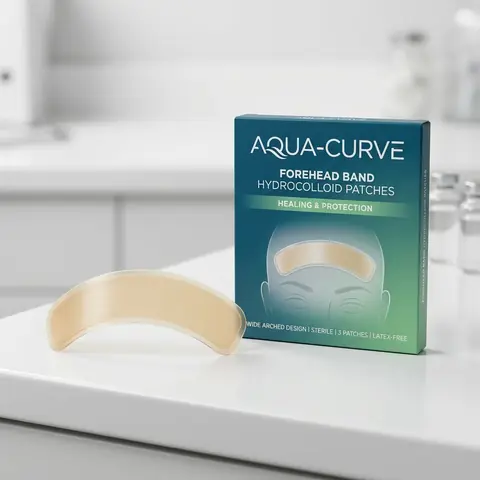
Illustration of a curved forehead pimple patch beside its box.
Same material as plain

Forehead patches

A curved patch shaped to sit on the forehead.

Best for
Surfaced spots on the forehead.
Watch for
Curves and hair can make a patch lift sooner.
Buy the patchSoon
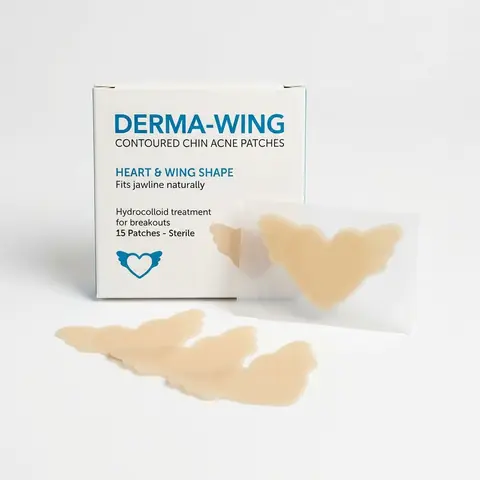
Illustration of contoured chin pimple patches next to a box.
Same material as plain

Chin patches

A contoured patch shaped for the chin and jawline.

Best for
Surfaced spots on the chin.
Watch for
Movement when you talk or eat can loosen it.
Buy the patchSoon
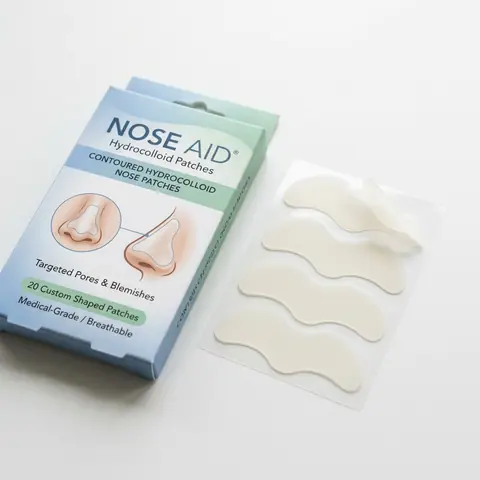
Illustration of contoured nose pimple patches next to a box.
Same material as plain

Nose patches

A contoured patch shaped for the nose.

Best for
Surfaced spots on the nose.
Watch for
These are not pore strips, and they do little for blackheads.
Buy the patchSoon

How to use a pimple patch in four steps

The short version. Read the full step-by-step guide for mistakes to avoid.

  1. Clean and dryWash your hands, gently cleanse the spot and dry the skin completely.
  2. Pick the right sizeChoose a patch that covers the whole spot with a little border.
  3. Press it onPlace it on bare skin and press lightly from the center out. Then leave it alone.
  4. Remove when whiteTake it off when it turns white, lifts, or the pack's wear time is up.

What does the research say?

Real numbers from published trials, with their limits in plain view.

Day 1 and 4

When popped, draining spots looked better with a patch in a 14-day randomized trial (2024) of people aged 12 to 35.

35% smaller

Spots were reported smaller by day 2 in a 2025 open-label trial of an unmedicated patch, compared with untreated spots.

Smaller, slower

Closed pimples improved less and more slowly than draining ones in the 2024 trial.

The honest limits: these studies were small and short. They looked at how spots looked over days, not at preventing breakouts over months. See the full evidence guide.

What patches cannot do

Knowing the limits saves money and skin.

  • Treat the cause of acneA patch is a spot tool. It does not stop new pimples from forming.
  • Fix blackheadsThere is no surface fluid to absorb, so a patch does little.
  • Reach deep bumpsPainful lumps under the skin need professional care.
  • Replace a treatment planWidespread or ongoing acne needs more than a patch.
  • Prevent scarsWe found no study showing that patches prevent scarring.

Six departments

Each department has a main guide and supporting articles that link to one another.

Acne Spot Care

How to treat a single spot: patching, aftercare, and when to get help.

3 guides

Where should a beginner start?

  1. Do Pimple Patches Work? What the Evidence Says

    Pimple patches can help some pimples look better within days, but not all of them. Here is what research shows, where it is thin, and when to see a dermatologist.

  2. How Hydrocolloid Pimple Patches Work (It Isn't Suction)

    A hydrocolloid patch absorbs fluid and shields a spot. It does not pull oil out of a closed pore. Here is what is really happening.

  3. Which Pimples Do Patches Help? Whiteheads vs Deep Bumps

    Whiteheads and popped spots are a good match for a patch. Blackheads and deep, painful bumps are not. Here is how to tell them apart.

  4. How to Use a Pimple Patch, Step by Step

    Clean, dry skin, the right spot and the right wear time make a patch stick and work. Here is the routine, plus the mistakes to skip.

  5. Pimple Patches for Sensitive Skin: How to Choose and Use Them

    Irritation from a pimple patch usually comes from the adhesive or an added active ingredient. Here is how to pick a gentler patch and what to do if skin reacts.

  6. Pimple Patches vs Gels and Creams: How They Compare

    A patch covers and protects one spot. Gels and creams treat the skin. Here is how each fits, and why most people do not need to pick just one.

See the Patches page

Latest guides

Pimple Patch Basics

Types of Pimple Patches: Every Kind Explained

Plain, medicated, microneedle, thin, thick, shaped and large patches: what each type is, what it is for, and how much evidence stands behind it.

7 min read. Updated October 12, 2026

See all articles

Frequently asked questions

Do pimple patches work?

Often on spots with a whitehead or an opening, less so on closed bumps, and not on blackheads or deep bumps. The best trial is small and short, so the evidence is encouraging, not settled. Read the full evidence guide.

Can I use a patch on a blackhead?

It is unlikely to help. A blackhead is an open clogged pore, so there is no surface fluid for the patch to absorb. A pharmacist or dermatologist can suggest treatments made for clogged pores.

How long should I leave a patch on?

Follow the pack. In general, leave it until it turns white or starts to lift. Dermatologists quoted in the media warn against very long wear, since it can irritate skin. Step-by-step guide.

Should I pop a pimple first?

No. The American Academy of Dermatology says popping at home can worsen acne, lead to infection and leave marks. If a spot opens on its own, a clean hand and a patch are a gentler way to protect it.

Are medicated or microneedle patches better?

We found no head-to-head comparison with plain hydrocolloid patches. Added ingredients can irritate some skin, and claims for microneedle patches on deep bumps run ahead of the published evidence. See what the studies show.

What if my skin reacts to a patch?

Stop using it if your skin burns, swells, blisters or itches badly. Ask a pharmacist or doctor, especially if you have reacted to adhesives before.

When should I see a dermatologist?

Patches are for the occasional surfaced spot. Ask a dermatologist, doctor or pharmacist if you have deep, painful bumps, several at once, acne that is spreading or not improving, scarring, signs of infection, or a reaction to an adhesive. If a deep, painful pimple does not improve with home care, the American Academy of Dermatology says a board-certified dermatologist can help.

How do we keep this honest?

  • Health claims name their sources, and articles show when they were last reviewed.
  • Each article says whether it rests on hands-on testing or on research only. See how we evaluate.
  • No star ratings, testimonials or before-and-after sliders.
  • Brands cannot pay for placement. See the affiliate disclosure and editorial policy.
  • Mistakes are fixed and noted under our corrections policy.

Not sure where to start?

Begin with the beginner path, or check the spot-by-spot table. If your skin is painful or getting worse, talk to a dermatologist.

Explore Patches Buy the patchLink coming soon Medical disclaimer

Sources for this page

  1. Dermatology Times. Social Media Mythbusters: Hydrocolloid Pimple Patches (Aug 15, 2026). Accessed October 11, 2026.
  2. American Academy of Dermatology. Pimple popping: Why only a dermatologist should do it. Accessed October 10, 2026.
  3. American Academy of Dermatology. How to treat a deep, painful pimple at home. Accessed October 10, 2026.
  4. TIME. Do Pimple Patches Actually Work?. Accessed October 10, 2026.